
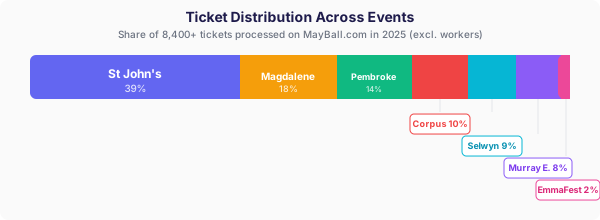
MayBall.com powered ticketing for 7 events in the 2025 season, serving over 5,000 unique guests. From the January release rush to the last survivors' photo at dawn, here's what the data tells us about how Cambridge May Week actually works.
8,400+
Tickets processed
7
Events
5,000+
Unique guests
100+
Marketplace transfers
The shape of the season
Ticket sales didn't happen all at once. Different events released at different times, creating distinct waves of activity across the year:
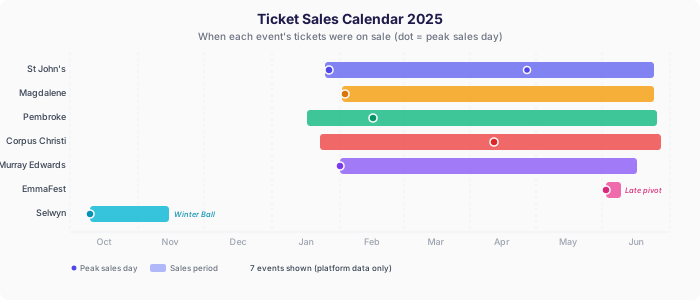
Some events sold out in days. Others had a steady trickle over months. The busiest single days saw hundreds of tickets sold within hours, which is why fair queuing systems make such a difference to the guest experience.
How fast do people enter a ball?
One of the most interesting things MayBall.com can measure is how guests actually arrive. Every ticket scanned at the door is timestamped, giving us a precise picture of entry flow across every event on the platform.
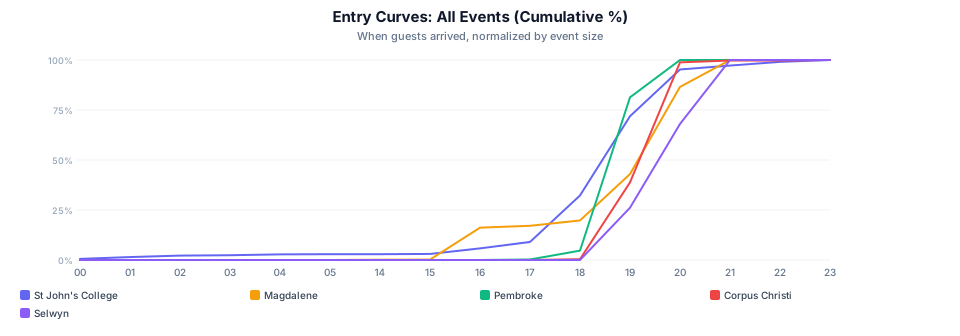
The curves reveal very different entry patterns depending on the event:
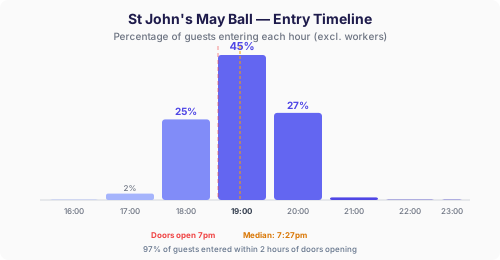
- St John's had the longest entry window — scanning started in the afternoon (workers and early access) with the main rush between 6pm and 8pm. The median guest entered at 7:27pm. By 9pm, almost 80% of guests were inside.
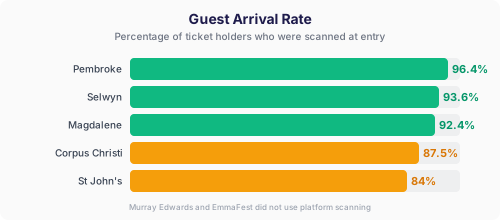
- Pembroke had the tightest entry curve: almost everyone arrived in a concentrated 2-hour window, achieving a 96% scan rate — the highest of any event on the platform.
- Corpus Christi was similarly concentrated, with nearly all scans happening between 7pm and 9pm.
- Selwyn's Winter Ball had a compact 3-hour entry window from 7pm to 10pm with a 94% scan rate.
Here's the detailed breakdown for St John's:
And here's how arrival rates compared across all events:
Before adopting MayBall.com's digital ticketing, entry at many balls could take over 3 hours — long paper-based queues stretching around the block.
A key part of the improvement is pre-scanning. MayBall.com allows security teams to scan guests' QR codes while they're still queuing, before the gates actually open. That means when the doors do open, verified guests can walk straight through. At St John's, the median guest was inside the ball just 27 minutes after gates opened at 7pm.
Pembroke achieved a 96% scan rate with almost all guests through in a two-hour window. Across the platform, every event using MayBall.com scanning saw arrival rates that would have been unthinkable with paper-based entry.
This matters for committees: faster entry means happier guests, less security overtime, catering that starts on schedule, and entertainment that plays to a full room rather than a half-empty one. MayBall.com's scanning system captures all of this automatically.
Who goes to more than one ball?
Of the 5,000+ unique ticket holders across all platform events, around 6% attended two or more events. That's a smaller number than many people assume — it suggests that for most Cambridge students, May Week means picking one event and making it count.
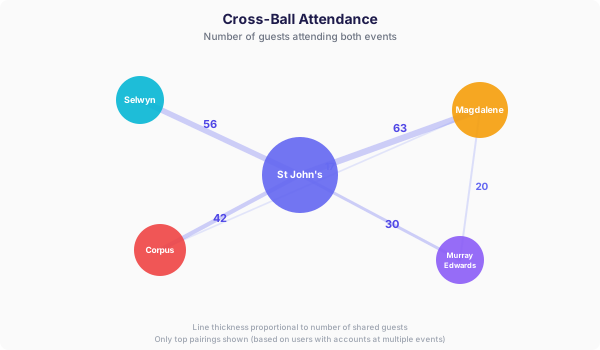
The most common cross-attendance pairings all involved the platform's largest event paired with one of the more affordable options. This makes sense — guests who attend a flagship ball are the ones most likely to also pick up a ticket for something smaller elsewhere in the week.
Release day: the biggest hour of the year
Peak ticket sales days saw hundreds of tickets sold in a single day across different events. These surges are the reason fair queuing systems matter — without one, the experience for guests is a panicked refresh race that nobody enjoys.
MayBall.com's queue system handled these peaks smoothly, giving every guest a fair chance regardless of whether they clicked at the exact second of release.
Year-over-year: do guests come back?
Looking at events that ran in both 2024 and 2025, we can measure return rates — what percentage of one year's guests come back the next. For the events with the strongest retention, around 1 in 5 guests returned to the same ball. Others didn't disappear from May Week entirely — many showed up at a different event on the platform, suggesting they were still engaged but exploring other options.
Given that a large portion of any ball's audience is final-year students leaving Cambridge, these return rates speak to genuine loyalty among alumni and continuing students. It also shows the value of cross-year data: committees can see not just how many people came back, but where the ones who didn't ended up.
Waitlists and overflow demand
Several events had meaningful waitlists — one event had nearly as many waitlist entries as tickets sold. This overflow demand doesn't disappear when a ball sells out; it migrates to other events or waits for transfer season.
MayBall.com's marketplace handled 113 official transfers during the season, keeping resale safe and visible rather than leaving it to chaotic social media swaps.
What this means for 2026
- Most people go to one event. If you're choosing, choose carefully — our ball choice guide can help.
- Release day matters. Sign up for ticket alerts so you know when sales go live.
- There's demand across the price range. From garden parties to flagship balls, every format found its audience in 2025.
- Waitlists work. If you miss out, join the waitlist — transfers happen, and the marketplace makes them safe.
Browse the 2026 directory to start planning, or check out the first-timer's guide if it's your first May Week.